




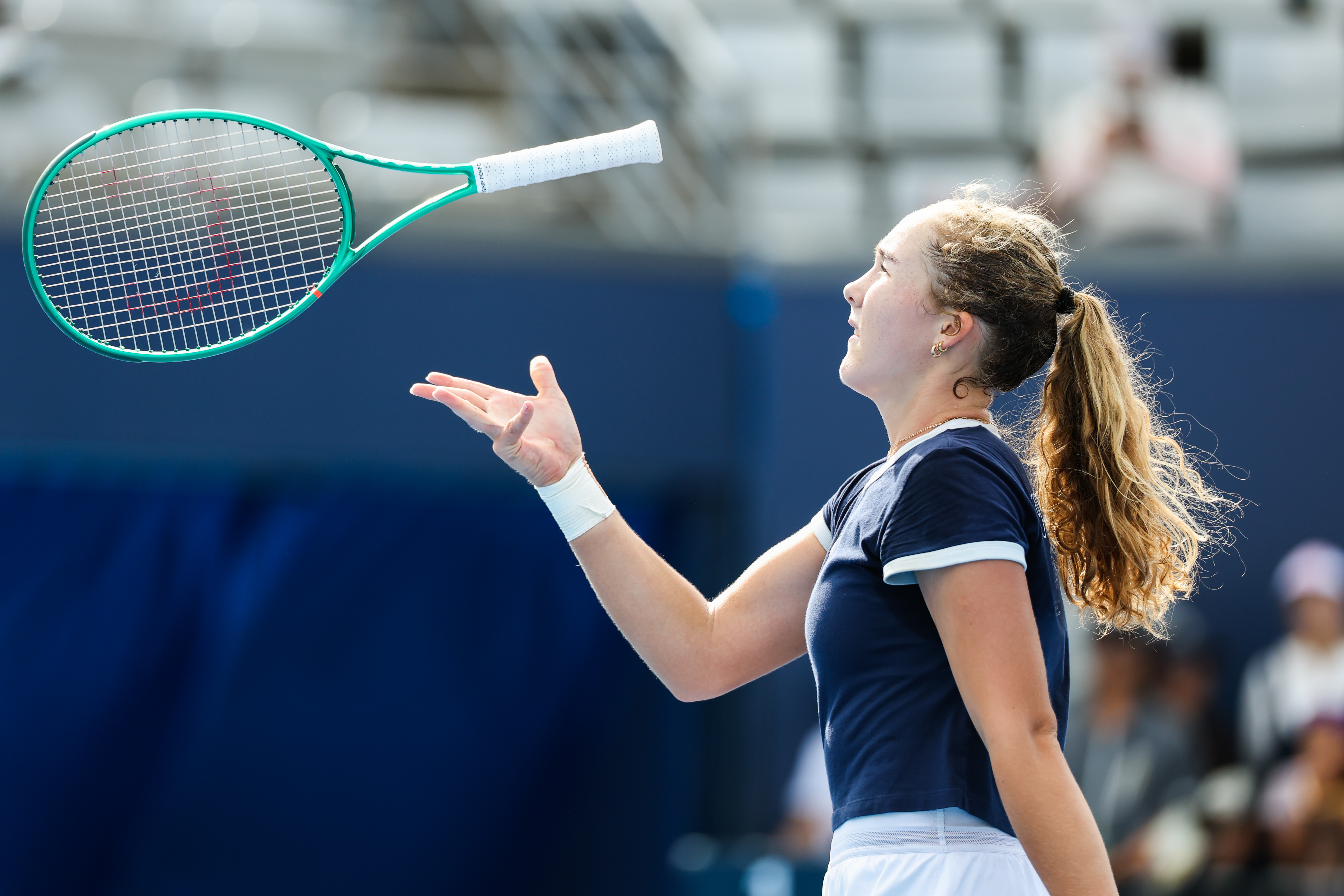
The best players in the world get the spotlight. Those behind the scenes help make sure they are ready for it.
Preparation for matches starts long before the first serve. For professional tennis players, that preparation includes making sure their rackets are strung to their exact preferences. Tension, string type and setup can vary from player to player, depending on how they play and what they want from their racket.
At every professional tournament, a team of racquet stringers works to meet those specifications.
Dustin Tankersley is part of the Wilson stringing team at the China Open, as well as at several Grand Slam tournaments. For Tankersley and the other members of the team, the job offers a rare opportunity to play a small role in the performance of the sport’s biggest stars.
“I think most of the guys that do this take pride in the fact that they’re stringing for the best players in the world,” Tankersley said. “Getting the opportunity to string for them while they’re playing their best is gratifying for most of them.”
Tankersley got into stringing when he was 16 years old, starting with his own rackets before getting a job at his local tennis club.
“I hung out (at the tennis club) a lot, and then I was kind of fascinated with the stringing process,” Tankersley said. “They let me start stringing my own rackets, and then I worked there for a time when I was in high school.”
Tankersley became interested in stringing professionally after attending a conference where he learned more about customizing rackets.
“I got interested in it by going to a conference where a guy was talking about customizing rackets, and he was also Pete Sampras’ personal stringer at the time,” Tankersley said. “I volunteered at some small local tournaments, and then I kept doing more and more and eventually got into doing big events.”

Players also adjust their string tension based on the weather, though the effects are more complex than many might expect.
“If it’s hotter, sometimes they’ll go up in tension; if it’s cold, they’ll go down in tension,” Tankersley said. “There’s more to it than higher tension gives you control and lower tension gives you more power. You get more depth on your shots when you drop tension. The ball sprays a little bit, but if you’re hitting the ball right, you’re getting more depth on your shots.”
The stringers stay busiest at the start of tournaments, with the workload gradually declining as players are eliminated.
“The busiest day we’ve had so far is, I think, 257 rackets,” Tankersley said. “We’re right at just under 2,000 right now for the event. On a busy day, guys are doing 25 or so rackets each.”
The number of rackets each player needs can vary widely.
“They’re all different,” Tankersley said. “Some are doing one or two, some are doing eight or nine.”

For the players, a freshly strung racket is just another part of preparing to compete. For Tankersley and his team, each racket is another chance to help a player feel ready when the spotlight turns their way.
By Ellis von Fintel

Weibo@ChinaOpen

WeChat Channel

Douyin@ChinaOpen
