




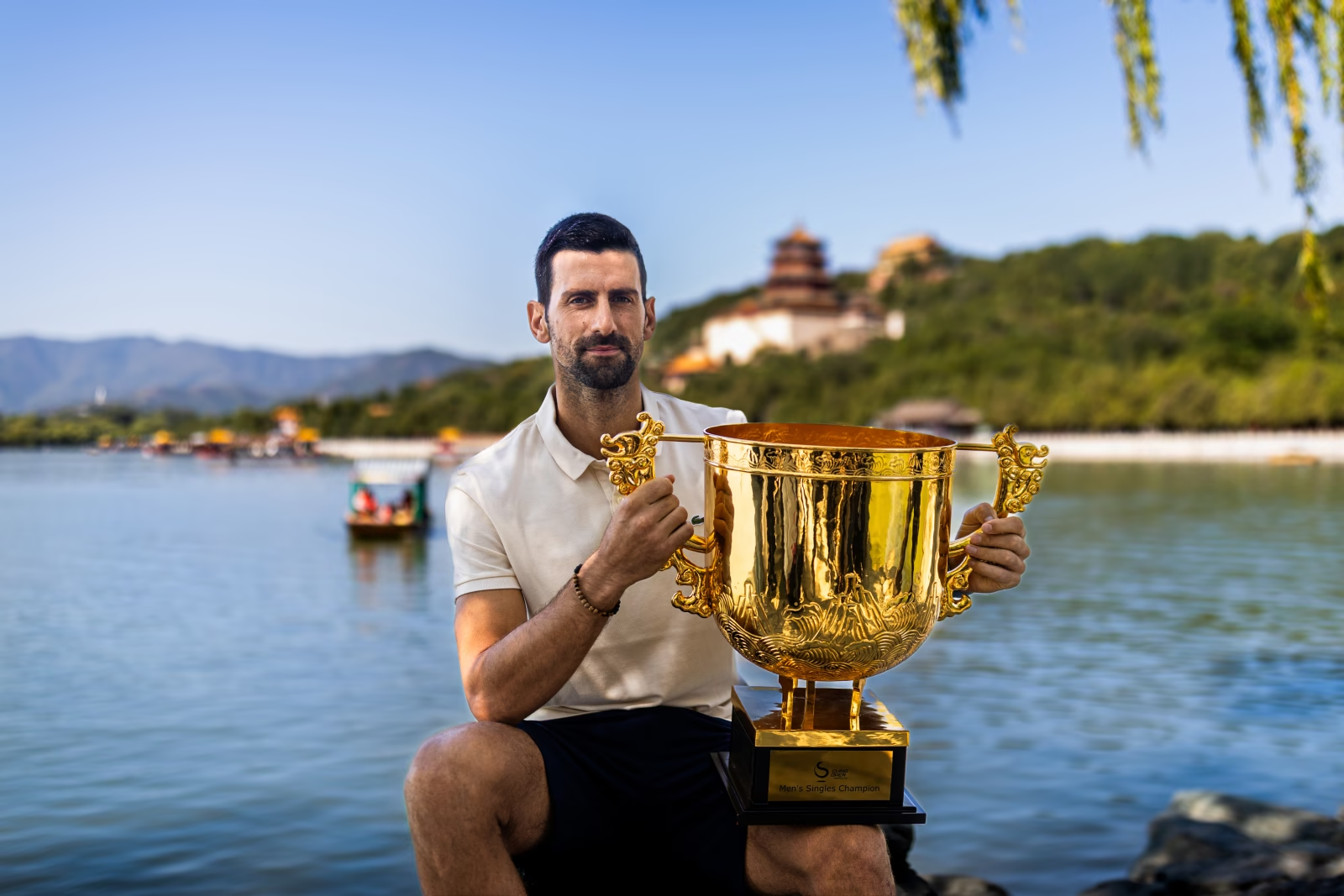
At 39, Novak Djokovic is still chasing history, still chasing championships.
But at the China Open, it was clear he is playing for something bigger than the next trophy, too.
Djokovic captured his seventh China Open championship on Tuesday, extending his perfect record in Beijing to 34-0 dating back to his tournament debut in 2009. He is the oldest man to win an ATP tournament since the great Ken Rosewall in 1977 and, in an incredible reflection of his prolonged excellence, he has now won at least one title in 21 consecutive seasons.
He has always carried high expectations into Beijing, but after a disappointing North American summer, he returned to the China Open for the first time in 11 years committed to defending his spotless record.
“I landed here quite early, to be honest,” Djokovic said. “I really wanted to get myself in the right shape to prepare.”
That preparation quickly became part of a larger Beijing routine.
Djokovic stayed near the Summer Palace and visited it every day, turning his walks through the historic grounds into a regular part of his time in China.
“I’ve been going there every single day. No joke,” Djokovic said. “That’s kind of part of the routine of having a walk around the Summer Palace.
“I put on my hat and my glasses, and I run or walk and I just go and explore the nature.”
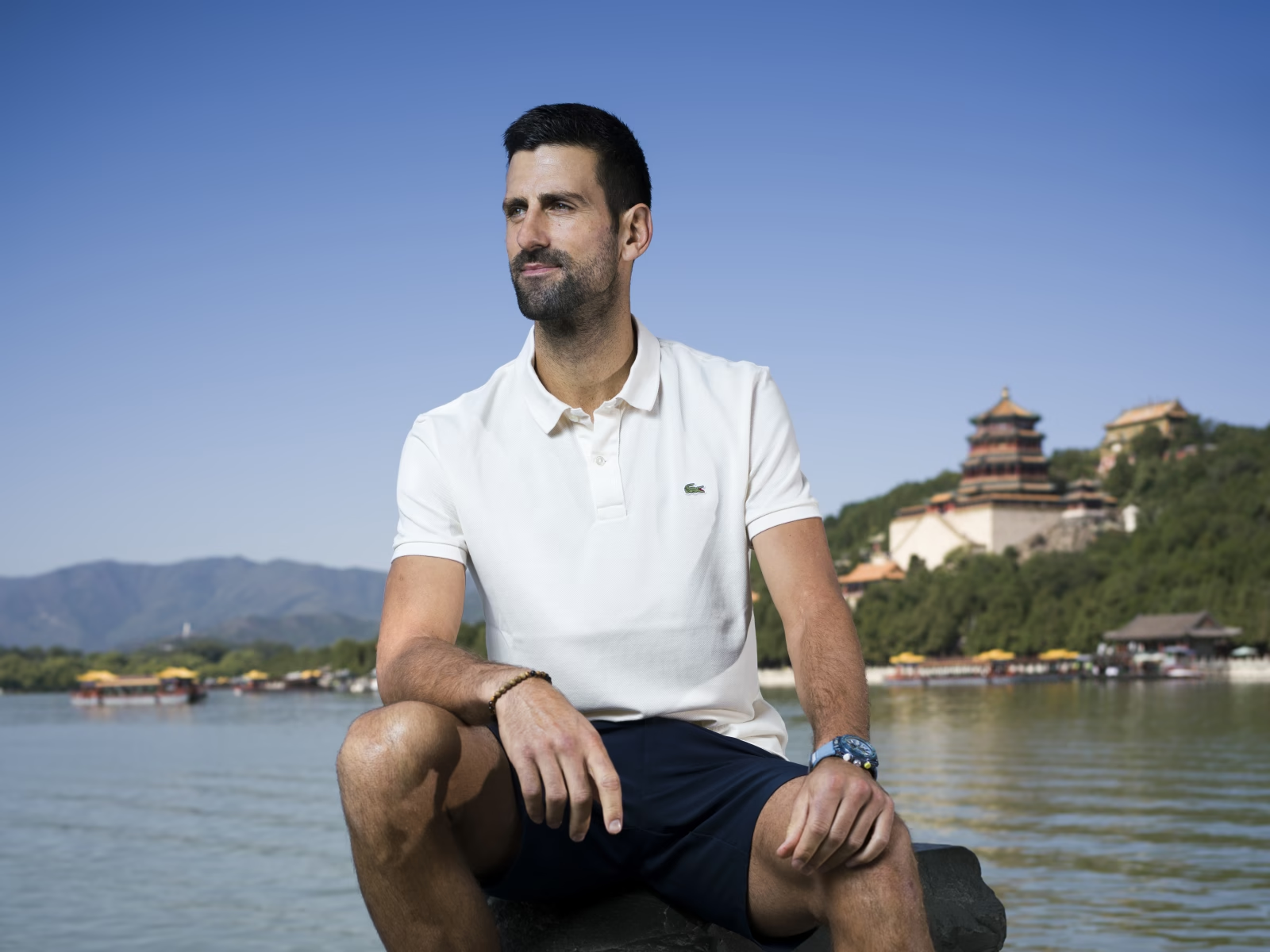
Djokovic’s connection to China extends well beyond the tennis court. He has long admired the country’s culture, describing it as something he can feel everywhere he goes.
“It’s a stunning place, but it has incredible history and tradition,” he said. “You can feel that in every step.”
Djokovic also has incorporated elements of Chinese wellness traditions into his routine.
“I’ve been practicing some of the ancient practices like Qigong,” Djokovic said.
Qigong, pronounced “chi gong,” was developed in China thousands of years ago. It involves exercising to maximize all energy within the body, mind and spirit while improving and maintaining health and well-being. Qigong has both psychological and physical attributes that involve the regulation of the mind, breath, body movement and posture.
Djokovic believes the results he has in China are no surprise because of this.
“All of these things are complimentary one to another and make me feel really good here,” said Djokovic.
The connection runs both ways. The China Open fans have embraced Djokovic throughout his seven titles, and this year they filled the Diamond Court for each of his five matches. Djokovic never had to look far to see the unwavering and boisterous support for his efforts and achievements.
“I did not expect the stadium to be full for every single match,” Djokovic said. “The people are so joyful and passionate about me being here.”
He considers the support he receives in China the best he gets anywhere outside his home country of Serbia. Fans bring him presents, interact with him and even wait outside his hotel before his matches, gestures that have made Beijing feel increasingly like home.
“The people make me feel like I’m Chinese, like I’m playing at home,” Djokovic said. “The only thing I need to learn is Chinese and get the passport.”
The warmth off the court has been matched by a resurgence on it. After a year filled with ups and downs, he arrived at the China Open having failed to win a match since Wimbledon. Djokovic found something familiar in Beijing: the mentality that has carried him through difficult matches and defined so much of his career.
In his most recent China Open title run in 2015, Djokovic conceded just 18 games across five matches. This year, he conceded 52 in five matches, including two three-set battles.
“I must say some of the matches here I did struggle,” Djokovic said. “I managed to push through and really dig deep, turning some matches around.”
On his path through the China Open, he managed to collect three Top-10 wins in three consecutive days, including a vintage effort to topple World No. 2 Alexander Zverev.
“I’m very proud of my achievement here,” he said. “It came at the best possible time as a confidence booster.”
“There’s proof that I can still play on the highest level.”
Now holding 102 ATP career singles titles, Djokovic is just one shy of Roger Federer’s 103 and seven behind Jimmy Connors’ record of 109.
But that longevity requires more than talent. Tennis demands an almost relentless commitment, with no options for substitutions, no teammates to pick up the slack, every match carries the possibility of an early exit. For Djokovic, that commitment has become a way of life.
“Grit is not something that you’re born with,” he said. “It’s something that really needs to be built. There’s a never-die spirit that really is always with me.”
That spirit is fueled by more than his own pursuit of another title. Djokovic knows people travel from around the world to watch him, whether they have followed his career for years or are seeing him play for the first time.
"Kobe Bryant used to say that. He would always want to play because there probably is always at least one or more fans that are coming maybe the only time to see you perform," Djokovic said."
“You’re not just playing for yourself; you’re playing for the people, for the sport."
Djokovic isn’t sure what the future holds. He is reticent to make commitments he can't keep. He doesn't know what he will be doing next month, let alone next year.
But if there's one thing the 39-year-old made clear at the China Open this year. He has no plans to leave China behind.
"We will see," Djokovic said with a smile. "I will be back in Beijing, for sure. In which role and how, I don't know yet.
"But I will be back in China, for sure."
By Dominic Achille

Weibo@ChinaOpen

WeChat Channel

Douyin@ChinaOpen
