





Performing at the highest level of tennis takes an abundance of skill, discipline and resilience. And behind every player who performs at the highest level on the court is a team working just as hard off the court to help make it possible.
“I think having a good team around you that just does everything to help you, not just on the court but off the court as well, is super important,” 19-year-old China Open semifinalist Mirra Andreeva said.
That support starts on the court. Coaches help players prepare for opponents, hitting partners arrange practice sessions and help sharpen their games, trainers oversee physical conditioning and equipment specialists make sure racquets are ready for competition.
Away from the court, agents and other team members manage finances, coordinate travel and handle the countless details of a career spent crisscrossing the globe, moving from one country, city and tournament to the next.
Earlier in her still young career, Andreeva used to handle much of these logistics herself.
“Of course, it took some energy from you,” she said. “Now, I have a lot of people that help me.”
Her support system includes her coach, former Wimbledon champion Conchita Martinez, her hitting partner, her agent and her parents, who have joined her in Beijing.
“They keep me good company,” Andreeva said of her parents. “It’s always nicer to spend time with your family rather than alone.”
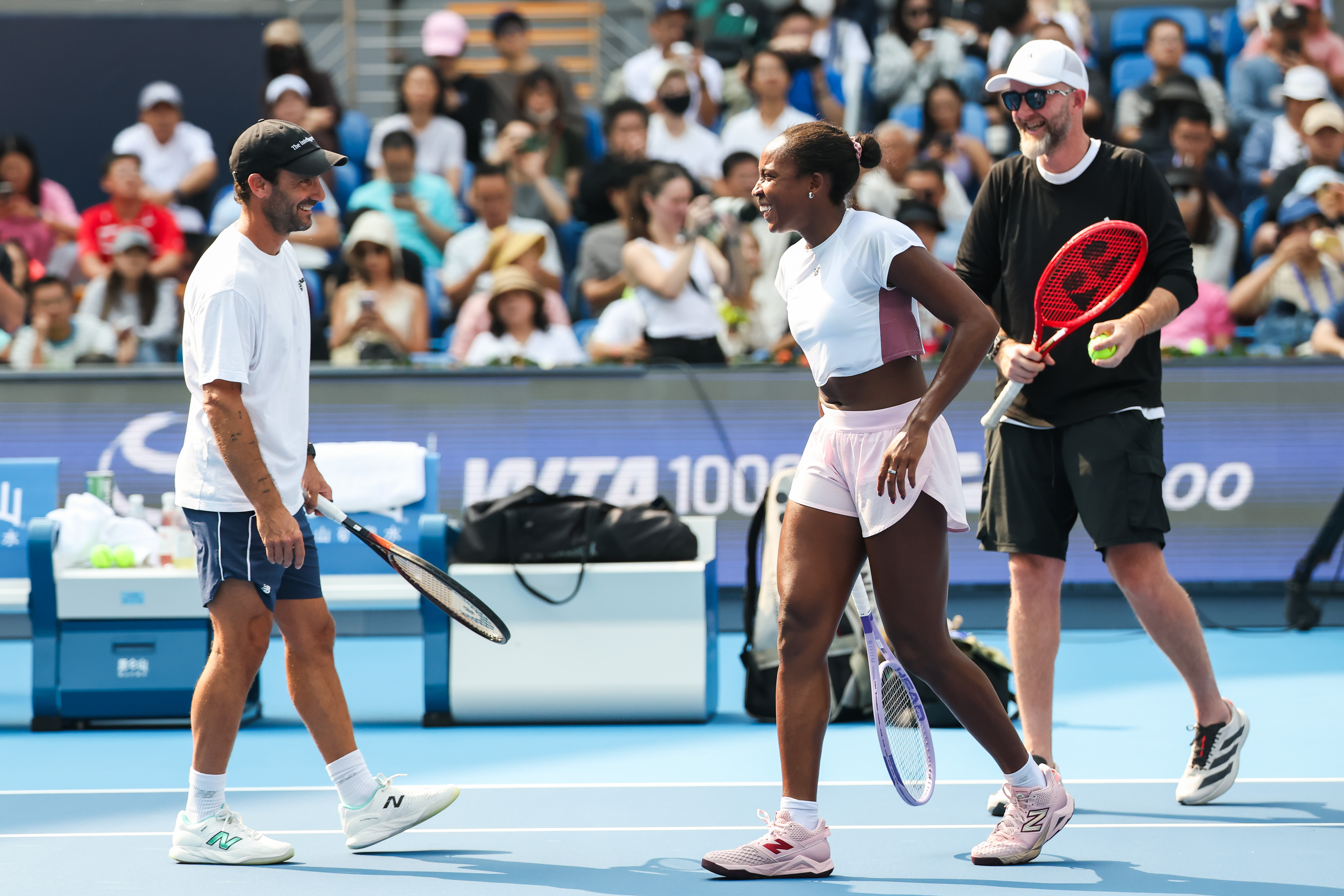
That combination of professional support and personal connection is especially valuable for young players navigating a demanding career far from home. And as players spend more time with their teams than with their own families, those working relationships can become something much closer.
“I feel like they’re family, that community,” Romania's Elena-Gabriela Ruse said of her team.
Ruse travels with a small core team that includes her coach, Andrei Cociasu, a physical therapist and a fitness coach. She also works with a psychologist remotely.
“I feel like home with them,” Ruse said. “I feel safe with them. It’s important to have that stability, and to know that they’re always there for me.”
That stability matters in a sport that places extraordinary demands on the body. Training, conditioning and recovery require constant attention, and a player's team helps manage the workload throughout a long season.
The physical work is only part of the equation. Players also need people they trust, particularly when the pressures of competition and the uncertainty of life on the road make consistency hard to find.
“It’s very important for me to have a good relationship with them and to be on the same line,” Ruse said.

Former No. 4 Paula Badosa knows how much players depend on that support. Even when the competition comes down to one person on the other side of the net, the work behind a successful performance involves many people.
“We’re there alone, out there alone (on the court), but without the team, it would be impossible to do to achieve so many results,” said the Spaniard. “So, they’re a big part of it, and they have helped me through everything.”
For Badosa, whose closest friend on tour is Aryna Sabalenka, that help extends to the practical demands of a career that rarely stays in one place for long. Her team, which includes her good friend Claudia Taberner, helps coordinate the logistics that keep her schedule running.
“I have like my person, agent, my assistant that does all that,” Badosa said. “She helps me with all the logistics.”
“It would be very, very tough for me to organize, so she helps organize a little bit the daily stuff and the logistics to travel around the world,” Badosa said.
The relationship also extends beyond the demands of the job. Away from the courts and training facilities, Badosa and her team make time to enjoy each other’s company.
“They’re like my best friends, and we try to have fun — to maybe go for a walk, to do stuff,” she said added with a smile.
For players moving constantly between tournaments and countries, those familiar faces provide more than professional assistance. They offer companionship, stability and a sense of home, even when home is thousands of miles away.
The player may stand alone on the court, but it takes a village to get there.
By Sierra Hanson

Weibo@ChinaOpen

WeChat Channel

Douyin@ChinaOpen
